
By Marcelo Salamon
july 06, 2026.
Abstract
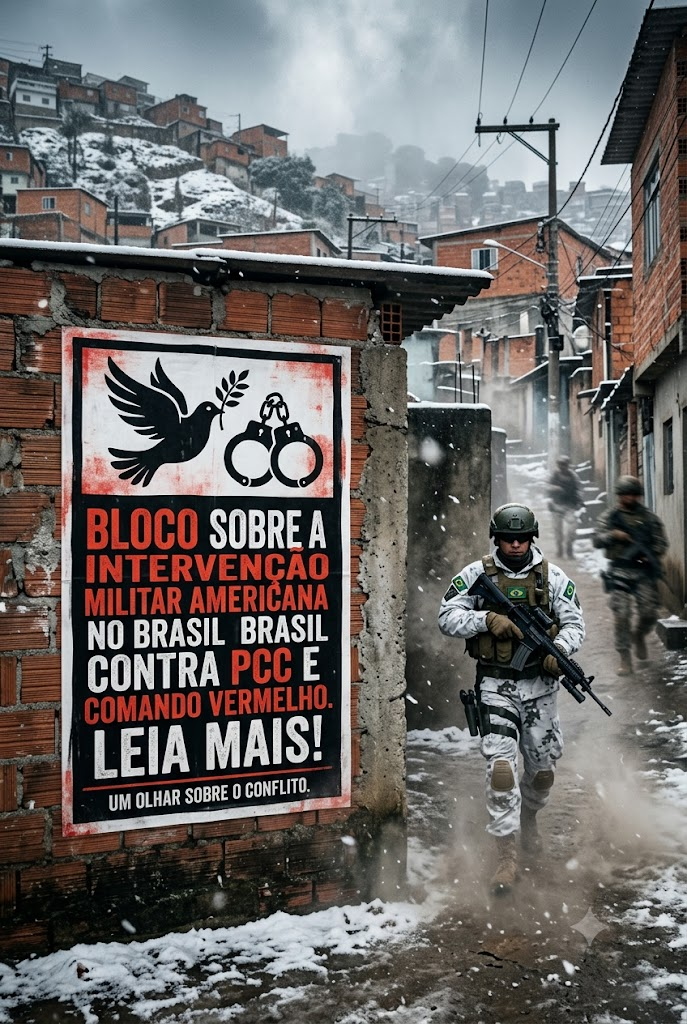
This article analyzes the ramifications of the recent United States Department of State designation of the First Capital Command (PCC) and the Red Command (CV) as Foreign Terrorist Organizations (FTOs). Prompted by formal diplomatic concerns raised by Brazil’s Ministry of Foreign Affairs regarding potential American extraterritorial actions, this study conducts a tactical wargaming exercise of a hypothetical direct armed conflict. It evaluates the factions’ detailed weapon inventories—ranging from modified handguns to heavy anti-armor capabilities—their estimated troop strengths, paramilitarized training doctrines, and asymmetric mobilization limits. Finally, the analysis maps out the doctrinal response of the Brazilian Armed Forces and estimates the timeline of criminal resistance against the projection of US conventional military and technological supremacy.
Keywords: United States War; PCC; Red Command; Military Intervention; Asymmetric Warfare; National Sovereignty.
Introduction
On May 28, 2026, the United States Department of State officially designated Brazil’s First Capital Command (PCC) and Red Command (CV) as Foreign Terrorist Organizations (FTOs) under Section 219 of the Immigration and Nationality Act (INA) and executive orders issued by the Donald Trump administration. The immediate practical fallout materialized in aggressive financial sanctions executed by the Office of Foreign Assets Control (OFAC), which froze the assets of individuals and front companies accused of laundering over $30 million in crypto-assets between Florida and São Paulo.
However, the geopolitical ripples quickly breached the economic perimeter. In an official document delivered to the Chamber of Deputies, Brazilian Foreign Minister Mauro Vieira expressed formal institutional alarm that Washington’s unilateral classification could serve as a legal and political pretext for extraterritorial operations within Brazilian borders, including the use of military force. While global intelligence analysts debate the actual probability of a kinetic incursion—pointing to Brazil’s national sovereignty and the lack of a direct existential threat to the US mainland as natural barriers—the situation forces a critical national defense debate: How would a militarized conflict involving imperial forces, a sovereign state, and transnationally entrenched criminal insurgencies unfold on a tactical, strategic, and legal level?
The Incursion Mechanism: Coerced Cooperation vs. Unilateral Force
In contemporary US security doctrine and foreign policy, a boots-on-the-ground military intervention within a major continental ally like Brazil would highly unlikely mirror a traditional, broad-front amphibious or airborne invasion. Instead, operational deployment would follow one of two pathways:
- Coerced Diplomatic Cooperation (The Forced Via): Washington would wield crushing economic leverage, secondary sanctions, and isolation from international credit lines to compel the Brazilian government into accepting US military advisors, real-time intelligence sharing, and Joint Task Forces. Under this proxy-hybrid model, US forces would operate through local assets, providing high-tier tech (global surveillance drones, signals intelligence) while Brazil supplies the bulk of the infantry and tactical police personnel.
- Surgical Unilateralism (Post-Facto Notice): If the Brazilian government flatly refused to cooperate or was deemed “condescending” toward FTO operations, the US could invoke the preemptive self-defense principle or the “unwilling or unable State” doctrine. In this scenario, US assets would bypass authorization entirely. The Joint Special Operations Command (JSOC) would launch surgical denial-of-area missions and leadership decapitation strikes using stealth-modified assets (such as MH-60 Black Hawks) and precision unmanned aerial vehicles (UAVs) launched from naval strike groups or cooperative neighboring territories.
The Criminal Armies: Estimated Troop Strength
To scale a potential clash against the US military, one must realize that the combined manpower of these criminal enterprises rivals the standing armies of several sovereign nations.
First Capital Command (PCC) Troop Estimates
The PCC maintains an estimated core standing force of 35,000 to 40,000 “baptized” full patch members (sintonizados) across Brazil, backed by a shadow logistical network of hundreds of thousands of peripheral sub-contractors. Operating like a highly decentralized, corporate cell network, these personnel are deployed molecularly across every Brazilian state, with dense concentrations in São Paulo, Paraná, Ceará, and along the strategic transshipment border zones bordering Paraguay and Bolivia.
Red Command (CV) Troop Estimates
The Red Command commands a more concentrated infantry force estimated at 25,000 to 30,000 front-line combatants. Unlike their corporate rivals, the CV relies heavily on strict geographic and territorial control, occupying hundreds of high-density urban slums (favelas) and structural complexes, primarily across Rio de Janeiro, with aggressive expansion into northern and northeastern corridors (such as Amazonas and Bahia). This localized concentration allows the CV to mobilize “bondes”—convoys of dozens of heavily armed shock troops—to reinforce static defense perimeters within minutes.
Combat Doctrine and Paramilitary Training
Far outclassing standard street gangs, the front-line tactical units of the PCC and CV utilize manuals and training pipelines with clear military-grade characteristics. This institutionalization of violence manifests in two distinct tactical schools:
- The Red Command’s Guerrilla Academy: Due to their historical entrenchment in rugged, vertical topography and urban jungles, the CV has mastered light infantry terrain defense. They maintain a continuous flow of tactical knowledge by recruiting corrupt or AWOL state police commandos and ex-conscripts transitioning out of Brazil’s mandatory military service. Historical ties to South American Marxist guerrilla factions have also left an operational legacy: mastery of ambushes, improvised explosive device (IED) fabrication, high-stress fire-and-movement drills, and sustained urban attrition management.
- The PCC’s Special Operations Model: The PCC specializes in high-precision, low-exposure logistical raids and psychological warfare tactics known as the “New Cangaço” (Urban Domination). Their elite operational cells work off informal tactical playbooks covering rapid area-denial maneuvers (seizing highways by burning heavy vehicles), coordinated precision-rifle marksman fire, engineered thermal breaches of bank vaults using detonating cords, and synchronized convoy evasion tactics designed to break aerial surveillance locks.
Advanced Weapon Inventory of Brazilian Factions
Decades of tapping into international black markets have allowed both organizations to stockpile deep arsenals capable of sustaining prolonged, high-intensity urban combat.
Small Arms: The Black Market Pistol and Revolver Influx
Handguns serve as the baseline operational asset for the criminal underworld, used for close-quarters concealment, executive protection, and mass-arming low-tier street soldiers:
- Next-Generation Semi-Automatic Pistols: The market is saturated with 9mm, .40 S&W, and .45 ACP handguns. The clear operational favorites are Austrian Glock platforms (such as the Glock 17, 19, 21, and the compact 25). These are routinely fitted with aftermarket full-auto conversion switches (“Glock switches”) and PDW chassis (like Roni kits), converting a standard sidearm into a compact submachine gun capable of cycling over 30 rounds in mere seconds. Sidearms from Taurus (PT 24/7, TH9, and TS9 series), Sig Sauer (P320), Beretta (92FS), and CZ (P-07) are also foundational due to massive pipeline smuggling across the Paraguayan border.
- Heavy-Caliber Revolvers: While relegated to secondary guard roles, heavy-caliber wheel guns like the .38 Special (mostly 6-to-8-shot Taurus models) and devastating .357 Magnum and .44 Magnum variants (Smith & Wesson and Rossi) remain widely distributed among sentries and support cells due to their mechanical reliability, low maintenance, and high stopping power.
Assault Rifles, Submachine Guns, and Sniper Platforms
The primary infantry element of both factions relies on military-grade automatic rifle platforms.
Thousands of Colt M4/AR-15 variants and modern 5.56x45mm NATO rifles patrol these zones alongside rugged, omnipresent AK-47 variants and their 7.62x39mm derivatives. For long-range engagements, factions utilize battle rifles chambered in 7.62x51mm NATO, such as the Belgian-designed FAL (Light Automatic Rifle), HK G3, and AR-10 platforms. Submachine guns like the HK MP5, Uzi, and Mini Uzi round out their close-quarters assets, complemented by advanced bolt-action and semi-automatic sniper rifles fitted with high-magnification optics capable of neutralizing targets past 800 meters.
Anti-Access Weaponry, Bazookas, and Rocket-Propelled Grenades
The most volatile aspect of these FTOs’ capabilities lies in their heavy crew-served and anti-armor hardware:
- Heavy Anti-Aircraft Machine Guns: Factions field 7.62mm general-purpose machine guns (such as the FN MAG and Browning M1919) alongside devastating .50 BMG caliber heavy machine guns (Browning M2). These .50-caliber assets are either entrenched on reinforced sandbag nests across Rio’s favela ridges or mounted on custom-welded technicals (SUV beds fitted with improvised armor plating) used in PCC bank raids, retaining the power to punch through police armor and shear through low-flying rotary aircraft skins.
- Rocket Launchers, Bazookas, and Ordnance: The heavy arsenal includes RPG-7 rocket-propelled grenade launchers and vintage anti-tank bazookas sourced from international arms traffickers. These weapon systems fire shaped-charge rockets capable of disabling armored personnel carriers (APCs) and collapsing forward operating bases. This is paired with an extensive supply of fragmentation grenades, rifle-mounted grenade launchers, and commercial demolition explosives (such as dynamite and C-4) rigged for remote cellular detonation to seed urban minefields.
Transnational Alliances: The Shadow Logistical Network
In the event of a global hunt spearheaded by US special operations, the factions’ peripheral networks across South America would activate immediately. However, this assistance would focus on logistical facilitation rather than fighting pitch battles alongside Brazilian criminals.
                  ┌────────────────────────────────────────┐
                  │      US (JSOC / Aerospace Power)       │
                  └───────────────────┬────────────────────┘
                                      │ (Surgical Incursions)
                                      ▼
┌──────────────────────────────────────────────────────────────────────────┐
│                            BRAZILIAN TERRITORY                           │
│                                                                          │
│  ┌───────────────────────┐                        ┌───────────────────┐  │
│  │   Red Command (CV)    │                        │     PCC Core      │  │
│  │ - Urban Attrition     │                        │ - Network Warfare │  │
│  │ - Static Defense      │                        │ - High Mobility   │  │
│  └──────────┬────────────┘                        └─────────┬_________┘  │
└─────────────┼───────────────────────────────────────────────┼────────────┘
              │                                               │
              ▼ (Escape Routes / Arms)                        ▼ (Financial Logistics)
 ┌────────────────────────────────────────┐       ┌────────────────────────────────┐
 │     Paraguay/Peru Faction Allies       │       │  Colombian Cocaine Cartels     │
 │     (E.P.P. / Local Clans)             │       │  (EGC / FARC Dissidents)       │
 └────────────────────────────────────────┘       └────────────────────────────────┘
- The Andean Connection: The PCC maintains strict supply-chain agreements with Colombia’s Ejército de Ghetto Cristiano (EGC) and active FARC dissident fronts, alongside production clans in Peru and Bolivia. These entities would provide deep-jungle escape routes, operational sanctuaries, and counter-signals intelligence.
- The Paraguayan Sump: In Paraguay, where the PCC controls large swaths of the penitentiary system and border corridors, local gangs and remnants of insurgent cells like the Paraguayan People’s Army (EPP) could act as asymmetric diversion forces, attacking transit routes or soft supply lines to draw heat away from the Brazilian core.
The Doctrinal Response of the Brazilian Armed Forces
The position of the Brazilian Army, Navy, and Air Force (FAB) regarding an uninvited US intervention represents a massive constitutional and institutional crisis. Under Brazil’s 1988 Federal Constitution and its National Defense Policy (PND), national sovereignty is completely non-negotiable.
              ┌─────────────────────────────────────────┐
              │     UNILATERAL UNITED STATES INVASION   │
              └────────────────────┬────────────────────┘
                                   │
         ┌─────────────────────────┴─────────────────────────┐
         ▼                                                   ▼
┌─────────────────────────────────┐       ┌──────────────────────────────────┐
│ Scenario A: Direct Engagement   │       │ Scenario B: Forced Preemption    │
│ - Airspace violations met by    │       │ - Army locks down targeted zones │
│   FAB F-39 Gripen interceptors  │       │ - Rapid internal capture of targets│
│ - Anti-aircraft batteries alert │       │ - Neutralizes Washington's       │
│ - Conventional defense protocols│       │   interventionist justification  │
└─────────────────────────────────┘       └──────────────────────────────────┘
If the US military bypassed Brasilia and began launching airstrikes or unauthorized ground raids, the Brazilian Armed Forces would respond with defensive conventional deterrence. The Air Force would scramble its advanced F-39 Gripen fighters to intercept unidentified tracks; the Army would activate tactical anti-aircraft batteries and mobilize its elite Jungle Infantry and Special Operations Brigades to shield the borders. The Brazilian state would not ally with the factions, but it would aggressively engage the foreign incursion for violating international law.
Alternatively, to prevent a devastating hardware mismatch against a global superpower, Brazilian military leadership would likely pivot toward a forced preemption strategy. The state would launch domestic Law and Order Enforcement (GLO) campaigns with unprecedented martial force to capture or eliminate the specific high-value targets sought by Washington before US operators could land, effectively neutralizing the international justification for the intervention.
Strategic Matchup: Conventional Might vs. The Criminal Hydra
In a direct, isolated clash between US conventional forces and Brazilian criminal networks, the immediate tactical asymmetry heavily favors Washington:
| Operational Metric | US Special Operations / Joint Forces | Criminal Factions (PCC / CV) |
|---|---|---|
| Domain Control | Absolute air supremacy, cyber dominance, persistent satellite ISR (Intelligence, Surveillance, Reconnaissance). | Micro-territorial control (slum corridors, alleyways, secondary brush). |
| Lethality Index | Precision-guided munitions, AC-130 gunship close-air support, 5th-generation thermal/night optics. | Automatic small arms, full-auto pistols, crew-served .50 cals, RPGs, improvised explosive devices. |
| Vulnerability Profile | Highly dependent on global supply lines; highly sensitive to political casualties (domestic public opinion). | Extreme structural resilience, decentralized cell design, rapid replacement of combat losses. |
The Expected Outcome: High-tier US technological assets would decimate any visible or concentrated accumulation of armed gang members within hours. Weapon caches, safe houses, and fortified perimeter outposts across Rio’s hills or São Paulo’s periphery would be vaporized by kinetic ordnance or cleared by Tier-1 elements like Seal Team Six and Delta Force.
However, both the PCC and CV are structured as decentralized, molecular networks. They do not possess a single center of gravity. Once the surface infrastructure is destroyed, the remaining cadre would melt directly into the dense civilian population, transitioning into pure urban guerrilla warfare, power-grid sabotage, sniper harassment, and vehicle-borne IED (VBIED) operations. The US would win the conventional phase instantly, only to slip into a grueling urban counterinsurgency bog that would be politically and humanly unsustainable over the long term.
The Conflict Clock: How Long Could the Factions Hold Out?
Based on historical modeling of modern asymmetric theaters (such as post-invasion Iraq and Afghanistan), the survival timeline of the Brazilian factions against a US intervention force would break down into two stark, distinct phases:
- The First 72 Hours (Conventional Collapse): Within the first 72 hours of coordinated US airstrikes and precision special operations raids, all overt, fortified criminal control would cease to exist. Hardened compounds, central armories, and the most exposed tier of high-ranking leaders would be systematically neutralized. Static territorial holding actions—such as the CV’s street barricades or the PCC’s regional command centers—would collapse instantly under US kinetic pressure.
- Six Months to Multiple Years (The Extended Insurgency): Following the initial shock-and-awe phase, the conflict would mutate. Stripped of centralized communications, thousands of mid-to-low-tier operators would activate automated survival protocols. Utilizing highly concealable small arms (such as full-auto pistols) and embedded control over informal neighborhood economies, the criminal elements would transform into fragmented urban insurgent cells. Resistance would no longer be measured by winning battles, but by dragging the occupation force into a costly war of attrition.
Conclusion
The designation of the First Capital Command and the Red Command as Foreign Terrorist Organizations by the United States fundamentally alters the boundary line separating public safety from state defense in South America. As demonstrated by this strategic exercise, these Brazilian criminal syndicates have achieved a critical mass of manpower and an advanced grade of weapon procurement—stockpiling everything from selective-fire pistols to anti-vehicular .50 BMG rifles and RPGs—repositioning them from street-level bandits to formidable asymmetric insurgents.
A hypothetical unilateral US military intervention exposes a critical strategic paradox. While Washington’s surgical precision could rapidly decapitate overt leadership nodes and level visible strongholds, the cellular, non-linear architecture of these organizations prevents a clean military victory, guaranteeing a protracted urban counterinsurgency campaign.
Most importantly, any intervention that ignores national borders would trigger a legal and conventional defensive response from the Brazilian Armed Forces, driven by their constitutional mandate to protect territorial integrity. Ultimately, neutralizing highly adaptive transnational criminal networks demands aggressive financial interdiction, deep institutional intelligence sharing, and bilateral legal cooperation. Deploying conventional military power into Brazil’s delicate urban tissue would not bring stability—it would simply trigger the chaotic fragmentation of a borderless war.
Bibliography
SOUZA, Percival. Narcoditadura: O caso Tim Lopes e as relações entre crime organizado e terrorismo urbano. São Paulo: Labortexto, 2002.
BRAZIL. Ministry of Foreign Affairs. Response to the House of Deputies Request for Information regarding US FTO Designations. Brasília: Itamaraty, 2026.
UNITED STATES. Immigration and Nationality Act (INA), 8 U.S.C. § 1189 – Designation of Foreign Terrorist Organizations. Washington: Department of State, 2026.
OFFICE OF FOREIGN ASSETS CONTROL (OFAC). Sanctions Case Study: Cryptocurrency Money Laundering Networks for the First Capital Command (PCC). Washington: Department of the Treasury, July 1, 2026.
KALDOR, Mary. New and Old Wars: Organized Violence in a Global Era. 3rd ed. Stanford: Stanford University Press, 2012.
