
Salamon, Marcelo
04.27.2026
Abstract (Resumo)
Abstract: This article examines the political and social dynamics of modern Russia under the leadership of Vladimir Putin. It explores how the centralization of power is framed as a tool for stability, the state-driven emphasis on traditional family values as a counterweight to Western influence, and the practical implications of recent legal reforms. Specifically, it highlights the restrictions on social expression and the Supreme Court ruling designating the “International LGBT Public Movement” as an extremist organization, offering critical context for international visitors navigating Russia’s strict legal and institutional landscape.
The Role of Vladimir Putin in Modern Russia
Since taking office in 2000, Vladimir Putin has been the central figure in Russia’s political and social landscape. For many locals, his presidency represents a period of stability and economic growth following the turbulence of the post-Soviet 1990s. Visitors to Russia will notice a highly centralized authority focused on the Kremlin. This consolidation of power is often framed by the government as a necessary measure to ensure national security and state integrity.
Traditional Values and Cultural Identity
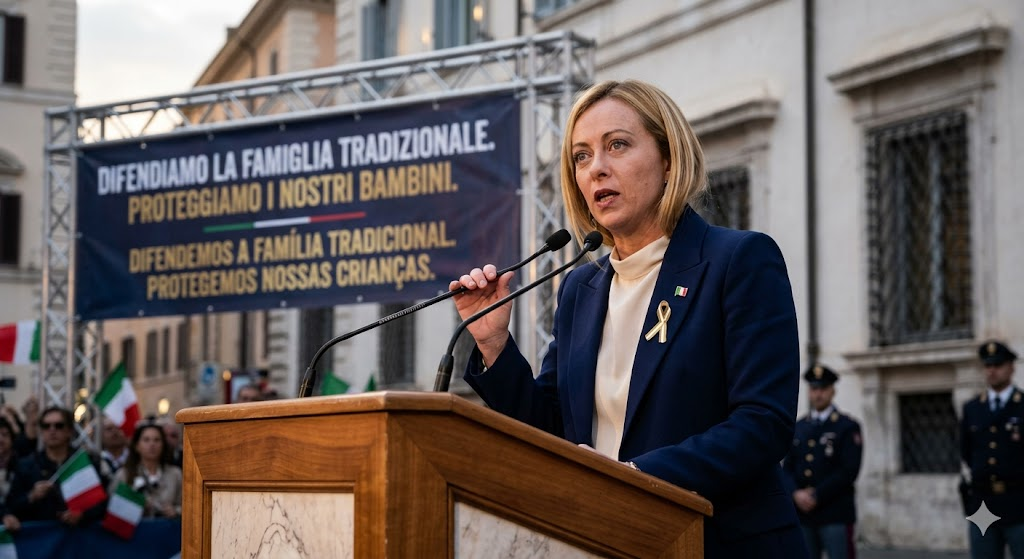
Travelers will find that modern Russian social policy strongly emphasizes traditional values. Putin has positioned himself as a defender of the family unit, seeking to restore what he views as the ethical pillars of Russian society. This narrative often contrasts with Western influence, which is sometimes perceived by the state as a challenge to cultural traditions. This domestic focus is mirrored in foreign policy, where a “strong Russia” image is promoted as a counterweight to Western global influence.
Gender Legislation: What Visitors Should Know
Russia has recently implemented significant changes to its legislation regarding gender and social expression. These reforms aim to preserve traditional family structures.
- Legal Restrictions: There are strict prohibitions on the distribution of information regarding non-traditional gender identities and sexuality. The government justifies these measures as protecting youth and moral education.
- Practical Impact: While these laws primarily target public activism and media content, they reflect a broader societal debate. Travelers should be aware that public displays or open discussions on these topics may be met with legal challenges or social friction.
Important Legal Notice: Supreme Court Ruling
It is vital for international visitors to understand the current legal climate. The Supreme Court of the Russian Federation has officially designated the “International LGBT Public Movement” as an extremist organization.
Legal Note: Under this ruling, any activity involving the promotion or support of this movement within Russian territory is classified as participation in a prohibited extremist structure. This effectively equates such activism with crimes against state security.
Perspectives on Governance and Institutional Structure
The Russian administration faces frequent international criticism regarding its institutional transparency. Some observers point to high levels of corruption and restrictions on civil liberties as signs of an authoritarian shift. However, a traveler’s experience may vary depending on who they speak to: many citizens credit the current leadership with bringing “order” (poriadok) to a country that was in disarray, viewing the leader as a stabilizer of national sovereignty rather than a participant in institutional misconduct.
The Centrality of the Family Unit
In Russia, the family is considered the bedrock of society. You will notice that many government programs are geared toward supporting the “nuclear family,” including:
- Financial incentives for families with multiple children.
- Housing support and benefits for mothers.
- A general cultural emphasis on the “State as an ally” to the traditional home.
This pro-family stance is a major component of Putin’s domestic popularity, as it aligns with a long-standing cultural identity that values family ties above globalized social trends.
Conclusion (Conclusão)
Conclusion: In conclusion, modern Russia presents a complex landscape where the pursuit of domestic stability and the preservation of traditional cultural identity are deeply intertwined with highly centralized governance. For many citizens, the current administration represents order and national sovereignty, while international observers view the ongoing legal restrictions on social expression and civil liberties as a significant authoritarian shift. Understanding these rigid legal frameworks, such as the Supreme Court’s classification of specific social movements as extremist, is essential for anyone analyzing or visiting the country, as the boundary between state security and personal expression remains strictly enforced.
References (Referências Bibliográficas)
- RUSSIA. Federal Law No. 478-FZ of December 5, 2022. State Duma of the Russian Federation. (Amending legislation regarding the prohibition of propaganda of non-traditional sexual relationships and/or preferences).
- SUPREME COURT OF THE RUSSIAN FEDERATION. Ruling of November 30, 2023. Moscow. (Designating the “International LGBT Public Movement” as an extremist organization and banning its activities on Russian territory).
- SPERLING, Valerie. Sex, Politics, and Putin: Political Legitimacy in Russia. Oxford University Press, 2015. (Analyzing the political use of traditional and family values to reinforce state authority).
- SAKWA, Richard. The Putin Regime: Power and Policy in Contemporary Russia. Routledge, 2020. (Examining the centralized institutional structure, state sovereignty, and domestic governance).
