
By Marcelo Salamon
April 22, 2026
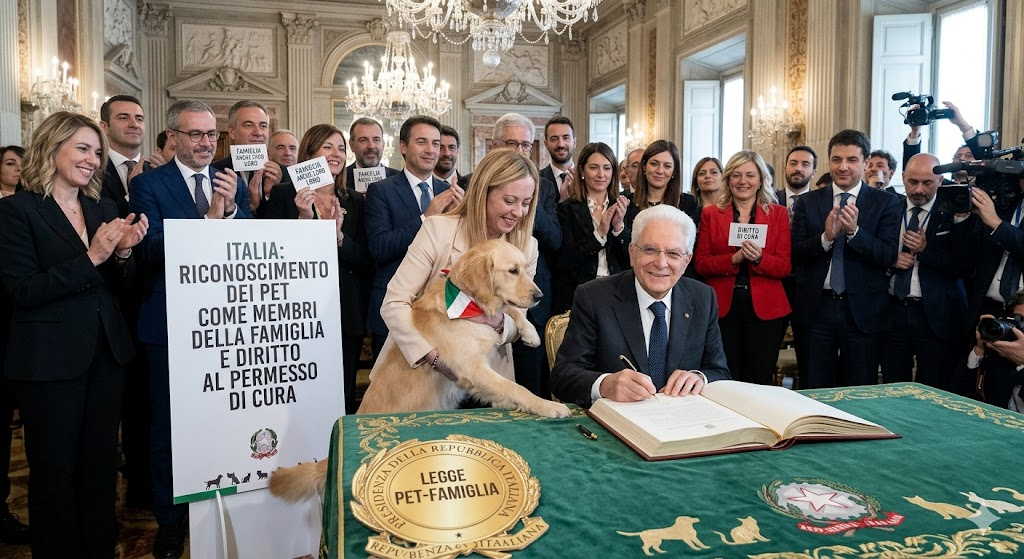
The traditional boundaries of the “nuclear family” are undergoing a profound legal and sociological transformation. Historically, Western legal systems classified domestic animals strictly as res—mere property or “things.” However, Italy has recently emerged as a global vanguard in animal rights jurisprudence, effectively dismantling the property-based paradigm in favor of an affective-centric model.
By recognizing pets as integral family members, the Italian judiciary and legislative framework have begun granting pet owners rights previously reserved for those caring for human kin. This shift is most visible in the labor market, where the necessity of caring for a critically ill pet is increasingly recognized as a valid justification for paid leave.
The Landmark Shift in Labor Law
The philosophical bedrock of this change is the recognition of animal welfare as a matter of public interest rather than private luxury. When a pet falls ill, the owner’s obligation to provide care is no longer viewed merely as a hobbyist’s choice, but as a moral and legal duty to prevent “unnecessary suffering.”
In a precedent-setting interpretation of the Italian Penal Code and labor regulations, courts have ruled that an employee’s absence to care for a pet can be categorized under “serious personal or family reasons.” This allows workers to utilize paid leave, equating the emotional and ethical gravity of a pet’s health crisis to that of a human relative.
Juridical Foundation: The Italian Framework
To understand the gravity of this evolution, one must examine the specific legal language used in Italian rulings. Below is a critical excerpt reflecting the logic used in Italian jurisprudence regarding the duty of care:
Italian (Original Text):
“La mancata cura di un animale di affezione, versante in gravi condizioni di salute o in pericolo di vita, integra il reato di maltrattamento di animali e di abbandono, attesa la nuova concezione che riconosce agli animali lo status di esseri senzienti e componenti del nucleo familiare.”
English Translation:
“The failure to care for a companion animal in serious health conditions or in a life-threatening state constitutes the crime of animal cruelty and abandonment, given the new conception that recognizes animals as sentient beings and members of the family unit.”
Sociological Implications for the Modern Workforce
This legal recognition reflects a broader cultural shift. In a society where birth rates are declining and “pet-parenting” is on the rise, the law must adapt to the reality of the multispecies household.
For the modern professional, this means:
- Job Security: Protection against disciplinary action when emergency veterinary care is required.
- Ethical Consistency: Aligning labor laws with animal protection statutes that penalize neglect.
- Mental Well-being: Acknowledging that the psychological distress of losing a pet is comparable to other forms of bereavement.
Italy’s approach challenges other nations to reconsider their own definitions of family. If the law acknowledges that animals are sentient beings capable of suffering, it must also acknowledge the human responsibility to alleviate that suffering without the fear of financial or professional reprisal.
Conclusion: A Compassionate Jurisprudence
Italy is setting a sophisticated standard for the 21st century. By integrating pets into the legal definition of the family, the state is not just protecting animals; it is protecting the human right to care, empathy, and companionship. As these precedents take root, we can expect a global ripple effect, where the “owner” is replaced by the “guardian,” and the “pet” is finally, legally, home.
