
By Marcelo Salamon
june 04, 2026.
Abstract
This article analyzes working conditions in the Brazilian meatpacking industry, counterbalancing its macroeconomic relevance with its severe impacts on the physical and mental health of workers. By examining both the historical background—marked by exhaustive shifts and high rates of Repetitive Strain Injuries (RSI)—and recent developments involving shifts in working hours and liability for slave-like labor conditions within the supply chain, this study debates the effectiveness of penalties applied by the Labor Courts. It concludes that despite a robust regulatory framework, the eradication of labor precariousness depends on continuous enforcement and overcoming procedural bottlenecks that delay financial compensation.
Keywords: Meatpacking Industry; Occupational Disease; Slave-Like Labor; Labor Courts; Civil Liability.
Introduction
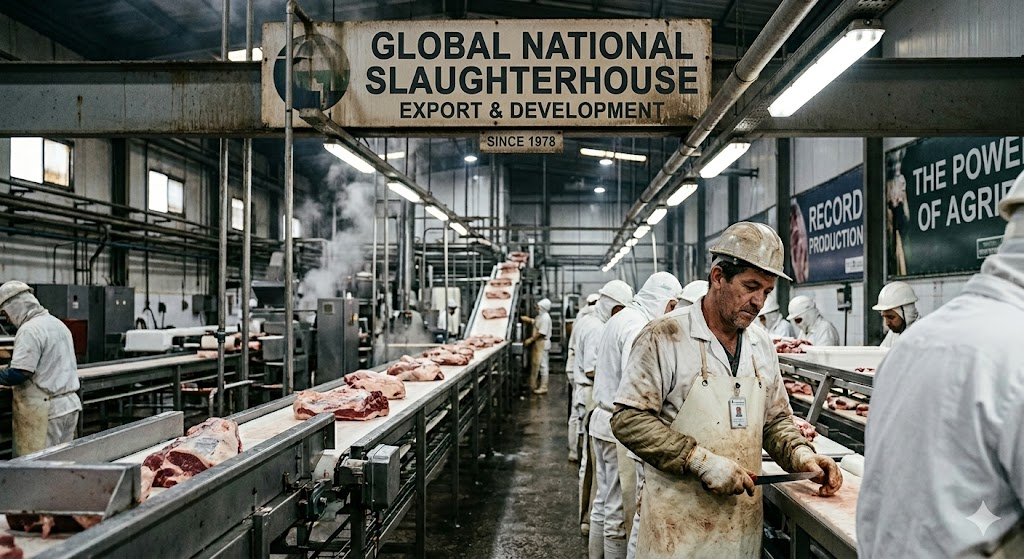
The meat agribusiness has consolidated Brazil as one of the largest players in the global animal protein market, generating significant foreign exchange and thousands of jobs. However, behind the scenes of this production efficiency lies a historical reality of human wear and tear. The slaughterhouse environment—characterized by intense cold, high-speed repetitive movements, humidity, and strict quota enforcement—frequently acts as a vector for occupational diseases.
Over the past few decades, the Judiciary and the Labor Public Prosecutor’s Office (MPT) have intensified their scrutiny of the sector. Longstanding disputes, such as the granting of thermal recovery breaks (Article 253 of the Brazilian Consolidated Labor Laws – CLT), are now coupled with complex contemporary demands. These include labor precariousness resulting from the outsourcing of peripheral activities (such as poultry catching) and the civil liability of major meatpacking corporations for the presence of slave-like labor conditions within their extensive raw material supply chains.
This article proposes a reflection on this evolution, evaluating the role of the Labor Courts in both punishing violations and repairing these damages.
Body: Historical Development and Contemporary Dynamics
Historical Evolution and Landmarks in Occupational Health (Past Facts)
Historically, the expansion of slaughterhouse assembly lines in Brazil occurred under Taylorist-Fordist models, prioritizing conveyor belt speed over ergonomics. For decades, labor litigation in the sector was overwhelmingly comprised of individual lawsuits seeking the recognition of causal links for Repetitive Strain Injuries (RSI) and Work-Related Musculoskeletal Disorders (WRMD).
The main turning point in regulations occurred with the enactment of Regulatory Standard No. 36 (NR-36) in 2013, which established strict parameters for workstations, task rotation, and, crucially, mandatory ergonomic and thermal recovery breaks. Prior to this, the enforcement of Article 253 of the CLT (which guarantees a 20-minute rest period for every 1 hour and 40 minutes of work in cold environments) was constantly bypassed by employers. This required intense judicial intervention to establish the precedent that the right to this break did not depend on working inside cold storage rooms, but rather on continuous exposure to artificial cold.
Rulings during this period focused primarily on individual indemnifications for pain and suffering (moral damages), property damages, and lifetime pensions due to the loss of working capacity.
The Expansion of Collective Damages and Supply Chains (Recent Facts)
In recent years, the focus of litigation has shifted from strictly individual claims to systemic and collective liability for large corporations in the sector. The Labor Public Prosecutor’s Office (MPT) began applying the theory of social dumping, arguing that repeated non-compliance with health and safety regulations constitutes an unfair commercial strategy used to lower operational costs. This interpretation has resulted in multi-million dollar judgments under the classification of Collective Moral Damages.
Beyond classic ergonomic pathologies, the recent landscape has brought to light severe labor precariousness at the margins of industrial activity:
- Outsourcing of Poultry Catching: The hiring of intermediary companies for the nighttime loading of chickens at farms has become a critical bottleneck. Inspections by the MPT and the Ministry of Labor have caught workers in conditions analogous to slavery (degrading housing, lack of sanitation, and exhausting hours), triggering joint and several liability for the purchasing meatpacking plants.
- Traceability and the Cattle Industry’s “Dirty List”: In the beef segment, pressure falls heavily on the chain of indirect suppliers. Major meatpackers have faced Class Action lawsuits (Ações Civis Públicas) and pressure from international investment funds for purchasing cattle from ranches that utilize slave labor or practice illegal deforestation. Jurisprudence has solidified the understanding that socio-environmental and labor liability is strict and joint throughout the entire value chain (due diligence).
Despite the significant volume of condemnations, the public perception of impunity or lack of compensation is directly correlated with the prolonged judicial execution phase. The strategic use of successive appeals by corporate defense firms ensures that the financial amounts awarded in judgments take years to reach the damaged workers or public labor welfare funds. Not to mention that the judicial system is unreliable, fraudulent expert reports are validated, unions constantly betray workers, and so on.
Conclusion
The historical and recent analysis of labor relations in the Brazilian meatpacking sector demonstrates that technological advancement and the economic growth of large corporations have not automatically erased the legacy of occupational disease and precarity. While past legal battles centered on granting breaks and the impact of individual musculoskeletal diseases, the contemporary arena has expanded the debate to corporate social responsibility over the entire supply chain (from the field to outsourced heavy labor).
The social perception of inadequate compensation reflects a structural issue within the Brazilian civil and labor procedural systems: the gridlock caused by a profusion of available appeals that delays final, unappealable rulings (trânsito em julgado). Nevertheless, case law shows that the Labor Courts remain highly active, converting flagrant irregularities into substantial individual indemnifications and million-dollar collective moral damages.
Moving beyond financial penalties, overcoming this scenario requires the consolidation of rigorous due diligence and compliance mechanisms by companies, alongside the preservation of the State’s independent regulatory enforcement power.
References
- BRAZIL. Consolidação das Leis do Trabalho (CLT). Article 253 (Governs mandatory rest intervals for workers in cold environments).
- BRAZILIAN MINISTRY OF LABOR AND EMPLOYMENT (MTE). Regulatory Standard No. 36 (NR-36). Safety and Health in Labor within Meat and Poultry Abattoir and Processing Enterprises. Brasília, DF.
- LABOR PUBLIC PROSECUTOR’S OFFICE (MPT). Class Actions (Ações Civis Públicas) and Consent Decrees (TAC) involving the national meatpacking sector. Inspection reports on combating slave-like labor conditions in cattle and poultry supply chains.
- SOLEDADE LABOR COURT / TRT4. Injunctions and Decisions in Class Actions regarding irregular outsourcing and degrading conditions in poultry-catching activities. (Recent Case Law).
- INTERNATIONAL LABOUR ORGANIZATION (ILO). Profile of slave-like and degrading labor in contemporary Brazil. Technical reports on the meat industry and global supply chains.
