
How the collapse of US-Iran negotiations reignited the risk of regional conflict
By Marcelo Salamon
July 15, 2026
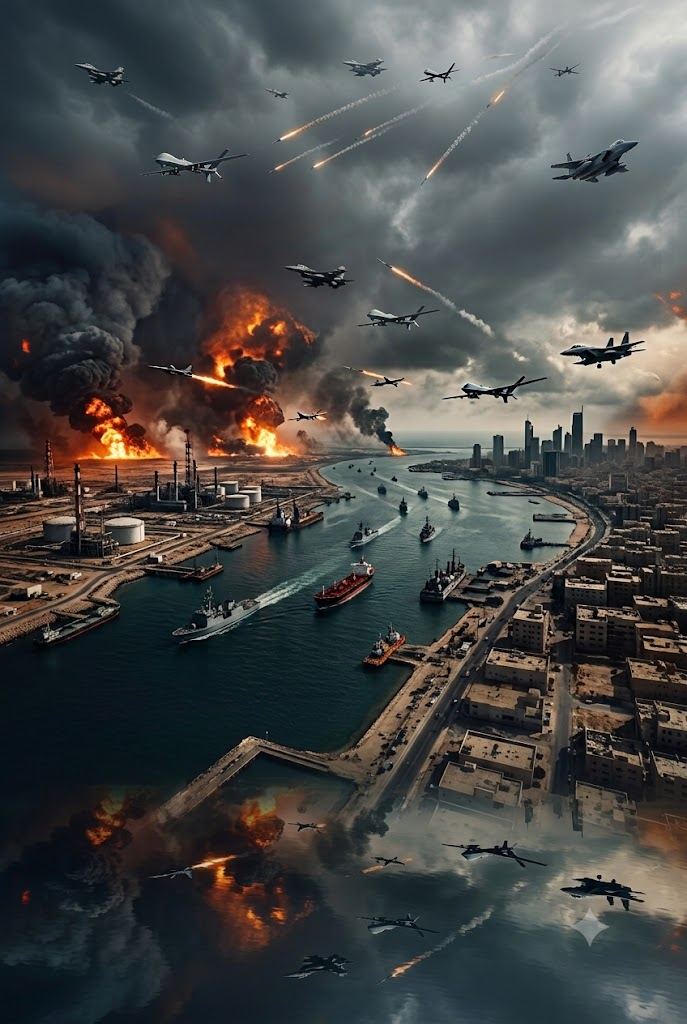
Executive Summary
This article analyzes the recent surge in geopolitical tensions in the Middle East following the collapse of diplomatic initiatives between the United States and the Islamic Republic of Iran. It examines the chronology of military events that succeeded the breakdown of dialogue, the strategic centrality of the Strait of Hormuz to global energy security, the systemic effects on international financial markets—including volatility in oil prices and the US Dollar—and the direct ramifications for Brazil’s economy and foreign policy. Finally, the article proposes prospective scenarios and outlines the structural reflections of this crisis on the contemporary global balance of power.
Keywords: Middle East War; United States and Iran; Strait of Hormuz; Oil; Geopolitics.
1. Introduction
Instability in the Middle East remains one of the most persistent fault lines in contemporary geopolitics. Historically, relations between the United States and the Islamic Republic of Iran have been defined by mutual distrust, severe economic sanctions, and proxy conflicts across theaters of war in Iraq, Syria, Yemen, and Lebanon. However, the recent failure to re-establish formal diplomatic channels has pushed the crisis from a state of containment into a phase of open, direct hostility.
The collapse of negotiation efforts removed the remaining diplomatic safeguards that prevented uncontrolled escalation. Without the buffer of communication channels, the risk of a large-scale military conflict—once limited to localized skirmishes—has become imminent. This article maps the succession of events leading to the current crisis, analyzes the geopolitical drivers behind the breakdown of agreements, and examines the profound economic and political consequences reverberating across global markets and Brazil’s macroeconomic landscape.
2. The Collapse of Negotiations
Multilateral negotiations, largely coordinated under European diplomatic auspices with active participation from the P5+1 powers (the United States, United Kingdom, France, Russia, China, and Germany), aimed to restructure and reactivate a nuclear control framework similar to the Joint Comprehensive Plan of Action (JCPOA). The primary goal of Western negotiators was to cap Tehran’s uranium enrichment levels and subject Iranian facilities to rigorous international inspections in exchange for the gradual lifting of crippling economic sanctions that isolated the country from global banking networks.
Despite intense rounds of extended dialogue, the negotiations collapsed irreversibly due to a combination of domestic and external factors:
- Unresolvable Guarantees: Tehran demanded absolute legal guarantees that future US administrations would not unilaterally abandon the pact—a commitment that Washington, under intense bipartisan pressure in Congress, was unable to formally provide.
- Technological Advances: The rapid technological advancement of Iran’s nuclear program and its refusal to fully cooperate with inspectors from the International Atomic Energy Agency (IAEA) made the agreement politically unviable for the West.
The international reaction to the definitive breakdown of talks highlighted deep fractures in the global system. While European powers lamented the closure of a peaceful window and warned of disastrous consequences for the nuclear non-proliferation architecture, powers like Russia and China blamed Washington’s intransigent stance and unilateral sanctions for stalling the process, subsequently strengthening their own strategic and military supply ties with Iran.
3. Timeline of the Military Escalation
The paralysis of diplomacy paved the way for a symmetrical and highly dangerous military escalation. Below is the chronology of how the diplomatic impasse transformed into active hostility across land and sea lanes in the Middle East:
- Phase 1: Diplomatic Breakdown and Initial Threats Following the official termination of talks, Washington adopts a renewed “maximum pressure” policy, expanding sanctions to the Iranian petrochemical sector. Iran responds by increasing its uranium enrichment to levels near the 60% military grade, threatening military retaliation if its export vessels are obstructed.
- Phase 2: Attacks on Strategic Facilities Oil refining facilities and cargo ports suffer sabotage attacks attributed to coordinated drone and explosive strikes. Iran accuses foreign intelligence agencies of conspiring against its industrial sovereignty, elevating its ballistic missile batteries to high alert.
- Phase 3: Intensification of Naval Military Operations The conflict spills heavily into the maritime environment. US naval vessels and international coalitions reinforce patrols in the Persian Gulf. The Islamic Revolutionary Guard Corps (IRGC) and Western forces carry out reciprocal seizures of international tankers, citing navigational violations.
- Phase 4: Retaliation via Missiles and Drones Tehran-aligned forces in Iraq and Syria, along with Houthi rebels in Yemen, launch massive offensives using strike drones and missiles against Western support bases, strategic port infrastructure in the Red Sea, and oil refineries. Air defense systems are pushed to their limits.
- Phase 5: Current Situation The Middle East remains in a state of permanent high alert. Western powers maintain aircraft carrier strike groups in the region to deter a frontal Iranian offensive, while Tehran consolidates military deterrence alliances, keeping international trade routes under constant threat of disruption.
4. The Strategic Importance of the Strait of Hormuz
The Strait of Hormuz is the most critical artery in the global energy market. Geographically situated between the Gulf of Oman and the Persian Gulf, this narrow channel—measuring only about 33 kilometers (21 miles) wide at its narrowest point—separates Iran from the Sultanate of Oman and the United Arab Emirates. Its tight physical geography means that shipping lanes must utilize highly confined internal channels for the safe passage of deep-draft vessels.
                  [ PERSIAN GULF ]
                         │
                         ▼
   [ IRAN ] ──►  Strait of Hormuz  ◄── [ OMAN / UAE ]
    (North)      (33 km / 21 miles wide)     (South)
                         │
                         ▼
                 [ GULF OF OMAN ]
- Global Oil Flow: Approximately 20% of the world’s liquid petroleum consumption—equivalent to roughly 20 million barrels per day—must flow through the strait.
- Key Exporters: It serves as the primary outlet for the largest exporters of the Organization of the Petroleum Exporting Countries (OPEC), including Saudi Arabia, Iraq, Kuwait, the United Arab Emirates, and Iran itself.
- Natural Gas: It is the primary transit route for liquefied natural gas (LNG) exported by Qatar.
Any operational disruption in the Strait of Hormuz—whether through physical sea mining, harassment of cargo ships, or the declaration of a war zone—triggers immediate repercussions for the global economy. Spikes in maritime freight rates and war-risk insurance premiums heavily impact international trade margins, disrupting global supply chains and threatening the energy security of industrialized nations in Europe and Asia.
5. Economic Impacts
- The Oil Market: The price of crude oil (Brent and WTI benchmarks) is the most sensitive barometer of the crisis. Rising geopolitical risk in the Persian Gulf bakes in a substantial “risk premium.” The threat of a physical blockade or attacks on tankers triggers immediate price spikes, which could easily push oil past $100 per barrel, imposing devastating costs on energy-importing nations and dragging down global GDP growth.
- Inflation and Supply Chains: Surging oil prices trigger a domino effect on global refining and transport costs. The costs of fuels like diesel and jet fuel are passed down to consumers through more expensive shipping rates, driving up inflation for durable goods and food. Costlier maritime routes force ships to bypass the Suez Canal and detour around the Cape of Good Hope in Africa, adding hundreds of thousands of dollars in operational costs per voyage and extending global delivery timelines.
- Global Financial Markets: Geopolitical uncertainty triggers a widespread “risk-off” environment across major stock exchanges, causing sharp drops in New York, London, Tokyo, and Frankfurt. Investors seek shelter in safe-haven assets, driving up the US Dollar against emerging market currencies and pushing gold prices to record highs. Conversely, highly speculative assets, such as cryptocurrencies, experience severe liquidation pressures.
6. Political Impacts
The crisis is rapidly reshaping global power alliances:
- United States: Washington faces the challenge of balancing its defense resources and avoiding a disastrous escalation without appearing weak against Iran.
- Iran: Tehran leverages its asymmetric deterrence capabilities to force recognition of its regional hegemony in the Gulf.
- Israel: Israel views the weakening of the Iranian regime and its proxy network as an absolute national security priority, actively engaging in both defensive and offensive maneuvers.
- Russia and China: Both powers exploit the crisis to erode US influence in the region. China seeks to secure a stable flow of cheap oil for its industries, while Russia solidifies its strategic military partnership with Tehran.
- The European Union: The EU finds itself in a fragile position, attempting to mitigate inflationary shocks to its energy grid while formally supporting sanctions against Iranian nuclear enrichment.
- Gulf States: Led by Saudi Arabia and the UAE, neighboring Gulf nations employ cautious diplomacy to protect their own oil infrastructure from Iranian retaliation. Meanwhile, the UN remains largely paralyzed by internal divisions and vetoes within the Security Council.
7. Prospective Scenarios
| Scenario | Description | Impact on Markets |
|---|---|---|
| Scenario 1: Localized Proxy War | Low-intensity proxy conflict. Maintenance of the status quo with sporadic, localized strikes but no direct war between the US and Iran. | Market stress remains within manageable limits. |
| Scenario 2: Open Regional War | A direct strike on high-ranking military assets or Iranian nuclear infrastructure triggers full-scale interstate war involving ballistic missiles and direct US/Israeli counteroffensives. | Severe global market panic; oil prices spike unpredictably; major flight to safe-haven assets. |
| Scenario 3: Strait of Hormuz Blockade | Facing an existential threat, Iran physically mines and closes the strait. | Exponential surge in oil and LNG prices; requires international naval intervention to clear and escort tankers. |
| Scenario 4: Emergency Diplomacy | Facing unsustainable economic and human costs, the parties utilize neutral mediators to broker a temporary ceasefire and reopen communication. | Rapid cooling of market risk premiums; stabilization of energy and stock markets. |
8. Consequences for Brazil
Despite being geographically removed from the epicenter of the conflict, Brazil remains highly vulnerable to the economic shocks triggered by the crisis:
- Fuel Pricing Pressure: The most immediate impact is felt at the pump. As international oil prices surge, Petrobras—which operates under a policy aligned with global market trends and marginal costs—faces intense pressure to adjust domestic gasoline and diesel prices upward in dollarized terms. Higher diesel prices directly increase truck freight costs, accelerating domestic inflation (IPCA).
- Currency Depreciation: Global risk aversion triggers capital flight from the Brazilian stock exchange (B3) into safe US Treasuries, weakening the Real and driving up the US Dollar exchange rate.
- Import Costs: A persistently stronger US Dollar inflates the cost of critical Brazilian imports, such as agricultural fertilizers, capital goods, and advanced technology.
- The Export Trade-Off: While Brazilian exporters of commodities like metals, soybeans, and meats may see higher dollar-denominated revenues, the broader domestic macroeconomic impact remains highly inflationary and restrictive to local credit markets.
9. Consequences for the Rest of the World
For the rest of the globe, the ramifications are deep and far-reaching:
The Cost of Shipping: Global shipping security is facing historic setbacks. Maritime companies are forced to reroute vessels and hire expensive private security services, straining the trade balances of developing nations across Africa and Latin America.
From a macroeconomic standpoint, the energy price shock acts as a global tax on consumption, draining household disposable income and forcing central banks to keep interest rates elevated longer to combat structural inflation. Energy-dependent nations in East Asia face the imminent threat of industrial slowdowns. Furthermore, these tensions accelerate the militarization of regional blocs and drive up national defense budgets at the expense of global investments in social infrastructure, green transition initiatives, and sustainable development.
10. Conclusion
The current escalation stemming from the diplomatic collapse between Washington and Tehran shows that the geopolitical balance in the Middle East has reached its most critical juncture in decades. The loss of diplomatic channels not only exposes the fragility of the current global security architecture but also demonstrates how localized conflicts possess the inherent power to destabilize complex global supply chains with alarming speed.
Regardless of the military scope of the crisis in the short term, the long-term ramifications are already unfolding. The transition toward a more volatile, multipolar world is redefining sovereign risk globally. For policymakers, financial agents, and global corporations alike, preparing for severe price shocks and prolonged logistical disruptions has transitioned from a theoretical exercise in risk management to an absolute requirement for economic survival and resilience in the twenty-first century.
Bibliography
- Allison, G. (2017). Destined for War: Can America and China Escape Thucydides’s Trap? New York: Houghton Mifflin Harcourt.
- Energy Information Administration (EIA). (2024). The Strait of Hormuz is the World’s Most Important Oil Chokepoint. Washington, D.C.: U.S. Department of Energy.
- International Atomic Energy Agency (IAEA). (2025). Implementation of the NPT Safeguards Agreement in the Islamic Republic of Iran. Vienna: IAEA Reports.
- Maloney, S. (2015). Iran’s Political Economy since the Revolution. Cambridge: Cambridge University Press.
- Yergin, D. (2020). The New Map: Energy, Climate, and the Clash of Nations. New York: Penguin Press.
